Most brands approach Pinterest ads like they approach Instagram or Google.
They run a conversion campaign.
They boost a few pins.
They wait for immediate sales.
When results feel slow, they assume Pinterest doesn’t work for their industry or their business. Just like any marketing channel, Pinterest has it’s own pathway to success. You have to understand its users and ecosystem to really get results from it. Pinterest is not interruption marketing. It’s not impulse-driven. It’s a visual search engine where people plan purchases weeks — sometimes months — before they buy.
And that’s exactly why Pinterest can be so powerful.
At PinHouss, we’ve worked extensively with home, decor, and lifestyle brands. The accounts that perform consistently well have one thing in common:
They build a full funnel.
This means the brands that perform best, don’t just think about the ad creative and copy, they think about the whole buyer journey from start to finish. If you’re missing that structure, you’re likely overpaying for cold conversions and underestimating Pinterest’s long-term potential. Let’s break down what a real Pinterest ads funnel looks like, and how to build it strategically.
Why Pinterest Requires a Full Funnel
Pinterest users aren’t just scrolling for entertainment. They’re actively looking for inspiration, planning their lives and looking for products to buy.
They’re planning:
- A kitchen refresh
- A nursery design
- A fall porch update
- A gallery wall
- A wedding
- A holiday tablescape
They come to Pinterest with a future-focused mindset. The other amazing thing about Pinterest is that 97% of searches are unbranded, which means users aren’t typing “Pottery Barn dining table.” They’re typing:
- “round oak dining table ideas”
- “neutral dining room decor”
- “cozy breakfast nook inspiration”
- “modern farmhouse lighting”
They are defining style, mood, and direction before they decide where to buy.
That creates a massive opportunity. Because if your brand shows up during that exploration phase, you influence the decision before brand loyalty even forms.
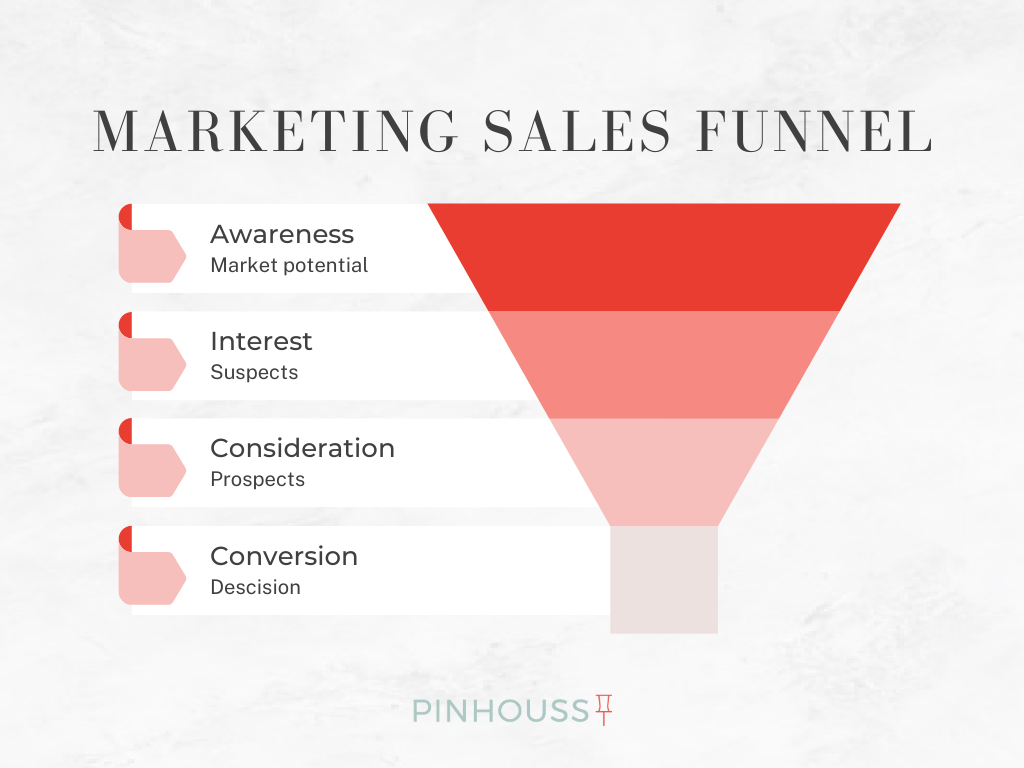
Stage 1: Discovery (Top of Funnel)
This is where most brands cut corners, and it’s also where most long-term growth is built.
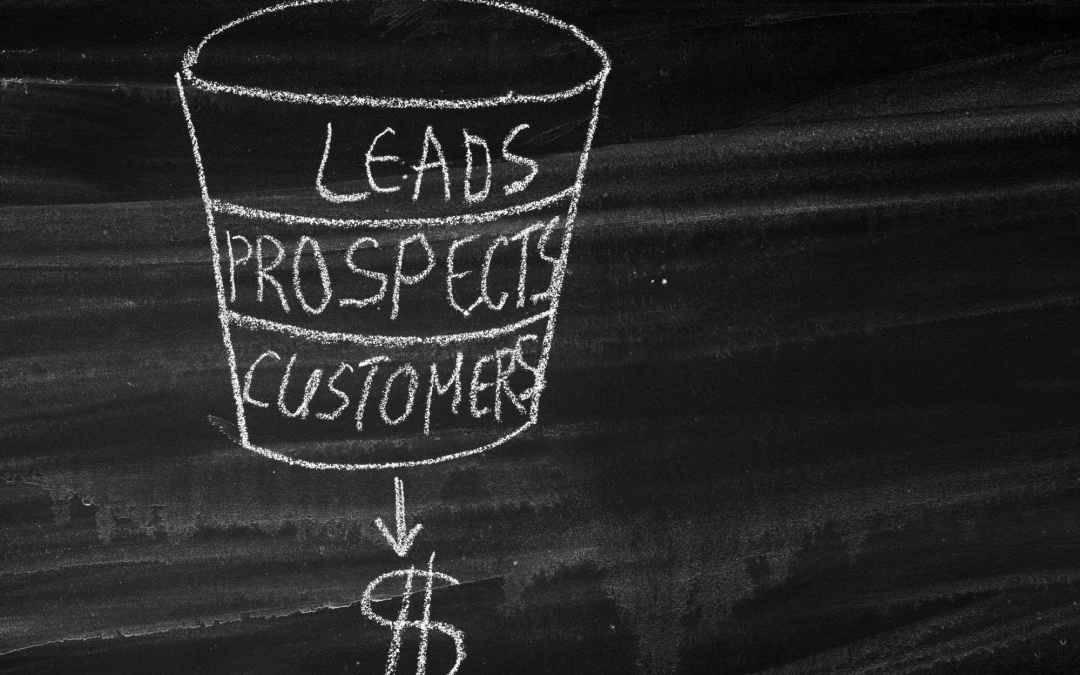
Think of your Pinterest funnel like a reservoir system. If you’re only trying to draw water out — running conversion ads, pushing sales, retargeting — but you’re not consistently pouring new water in at the top, eventually the well runs dry.
No new people in.
No new conversions out.
Discovery is how you fill the reservoir. This stage is about taking complete strangers, people who have never heard of your brand, and introducing them to your world in a way that feels natural, helpful, and aligned with what they’re already searching for.
On Pinterest, discovery is not about pushing a product. It’s about showing up inside search results that reflect how your customer thinks.
Not:
“Brushed Nickel Pendant Light”
But:
“Modern kitchen lighting ideas”
“Small dining room lighting solutions”
“Warm neutral home inspiration”
At this stage, your job isn’t to close the sale. It’s to earn attention.
Discovery campaigns allow you to:
- Show up in high-intent, non-branded searches
- Test creative angles and messaging
- Build warm audiences for retargeting
- Gather engagement data that improves future performance
And this is where Pinterest is uniquely powerful. Because users are planning and exploring — not brand-loyal yet — you have the opportunity to influence their preferences before they decide who to buy from.
At PinHouss, we see it all the time: brands that invest in discovery build momentum and have lower acquisition costs. Their retargeting pools grow. Their conversion campaigns get cheaper over time. Their brand familiarity compounds.
Discovery isn’t “extra.”
It’s the engine that makes the rest of the funnel work. If you aren’t consistently bringing new people into your Pinterest ecosystem, you can’t expect predictable sales on the other end.
Stage 2: Consideration (Mid-Funnel)
This is where Pinterest starts giving you real leverage.
At this point, your audience isn’t cold anymore. They’ve seen your content. Maybe they’ve clicked. Maybe they’ve saved a pin or watched a video. They’ve engaged in some way, and that engagement matters.
Because on Pinterest, behavior reveals intent.
In this stage, we begin to see which keywords are driving meaningful clicks, which creative is being saved, and which audiences are leaning in. That data is powerful. It tells us not just what looks good, but what people are actively evaluating. And this is where strategy evolves.
Early searches might look like “neutral living room ideas.” But as users move deeper into consideration, their behavior becomes more specific. They engage with things like “modern oak dining table” or “brushed nickel chandelier under $600.” The shift from inspiration to evaluation is subtle, but measurable.
Creative becomes slightly more product-focused. Value propositions and distinctions become clearer. You’re still native to Pinterest — still visually strong and aspirational — but the language tightens.
This is also where retargeting becomes intentional.
Instead of blasting the same ad repeatedly, we sequence messaging based on behavior:
- Someone who saved a style pin might see product options.
- Someone who viewed a product page might see reviews or benefits.
- Someone who added to cart might see a reminder or incentive.
Pinterest allows you to build these layers in a way that feels aligned with how users naturally explore the platform.
And yes — your website absolutely needs to support this stage. It should be fast, clear, visually aligned with your pins, and easy to navigate. But consideration on Pinterest isn’t just about what happens after the click. It’s also about what happens before the next one.
This is where performance compounds. You’re no longer guessing what might work. You’re refining based on real behavior, real keywords, and real engagement signals. At PinHouss, this is often the stage where accounts start to stabilize. Costs become more predictable. Creative direction becomes clearer. Scaling becomes possible.
Top-of-funnel fills the reservoir.
Mid-funnel filters and strengthens it. And without this stage, conversion campaigns rarely perform the way brands expect.
Stage 3: Conversion (Bottom of Funnel)
Now the user is in decision mode. They’ve visited your site. They’ve compared options. They’re evaluating.
This is where structured conversion campaigns matter.
Effective bottom-of-funnel Pinterest campaigns typically include:
• Dynamic retargeting (for ecommerce brands)
• Clear value propositions
• Direct creative (less abstract, more actionable)
• Offer reinforcement (free shipping, bundles, guarantees)
This is also the stage where your marketing channels begin working together instead of operating in silos.
Rarely does a customer see one ad and immediately convert. More often, the journey looks layered. Someone might first see your brand on Instagram. Later, they search for you on Google. Then they’re retargeted on Pinterest while continuing to explore ideas. Eventually, a well-timed pin catches their attention again — and that’s the click that brings them back to your website to purchase.
No single touchpoint gets full credit. It’s the accumulation.
When your messaging is consistent across platforms and Pinterest is intentionally layered into that ecosystem, momentum builds. Familiarity builds. Trust builds. And that’s where conversions happen — not from one isolated ad, but from a system that supports the entire decision-making process.
But here’s something important: If you try to start here without building the upper funnel, your costs will almost always be higher.
Pinterest conversion campaigns perform best when they’re supported by:
- Warm audiences
- Engagement history
- Repeated brand exposure
When managed correctly, this lowers acquisition costs over time.
Stage 4: Follow-Up & Retention
Pinterest is not just a traffic driver. It’s an entry point into your ecosystem.
If someone purchases and you have no follow-up strategy, you’re leaving lifetime value on the table.
Your backend systems matter just as much as your ad campaigns.
That includes:
• Email capture strategy
• Abandoned cart sequences
• Post-purchase nurturing
• Cross-sell flows
• Seasonal relaunch campaigns
• SMS (if applicable)
Pinterest supports long buying cycles. Your email and retargeting systems support long customer relationships.
We often tell clients: Pinterest opens the door. Your systems close the loop.
Where the Pinterest ROI Lab Fits In
This is exactly why we created the Pinterest ROI Lab.
Most brands don’t need “more pins.” They need clarity about what all these steps look like for THEIR business.
Inside the Pinterest ROI Lab, we help brands:
- Map high-intent Pinterest keywords
- Identify funnel gaps
- Audit their website alignment
- Outline a full Pinterest ad structure
- Build a 60-day action plan
- Clarify ad spend allocation
It’s strategic. It’s data-driven. And it’s built around measurable return.
The ROI Lab is not about surface-level tips. It’s about building the foundation for scalable Pinterest advertising.
If your Pinterest ads feel inconsistent, the issue likely isn’t the platform.
It’s the missing funnel.
And that’s exactly what we help brands build. Schedule your free Discovery Call today!